
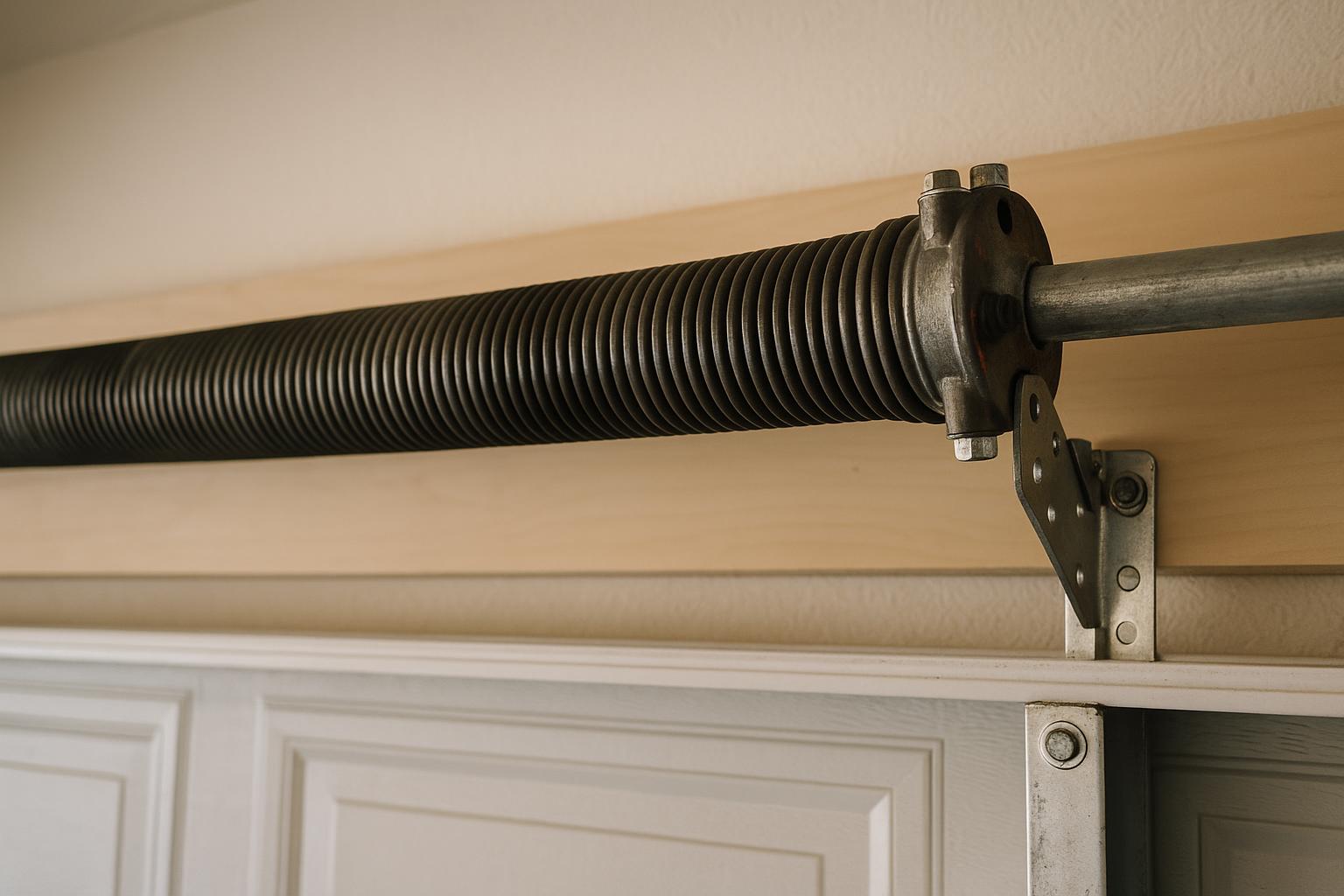
Your Garage Door Springs Are Doing More Work Than You Think
Every time you open or close your garage door, the springs are doing the heavy lifting — literally. A standard two-car garage door can weigh between 150 and 250 pounds, and the springs are responsible for counterbalancing all of that weight. Without functioning springs, your garage door opener alone couldn't move the door at all.
For homeowners in Grovetown and the surrounding Augusta area, garage door springs are one of the most critical — and most overlooked — components of the entire system. Most people don't think about their springs until one snaps, leaving the door stuck and their car trapped inside. Understanding the lifespan of your springs and recognizing the warning signs of wear can save you from an inconvenient and potentially dangerous situation.
How Long Do Garage Door Springs Typically Last?
Garage door springs are rated by cycle life. One cycle equals one full open and one full close of the door. The two most common types of springs have different expected lifespans:
- Standard torsion springs: These are rated for approximately 10,000 cycles. For a household that opens and closes the garage door four times per day, that works out to roughly seven to nine years of use.
- High-cycle torsion springs: These upgraded springs are rated for 25,000 to 50,000 cycles and can last 15 to 20 years or more depending on usage.
- Extension springs: Commonly found on older or lighter single-car doors, these typically last around 10,000 cycles as well, though they tend to wear less evenly than torsion springs.
Your actual spring lifespan depends on several factors, including how often you use your garage door, the weight of the door, and whether the springs have been properly maintained over the years.
Warning Signs Your Garage Door Springs Are Wearing Out
Springs rarely fail without giving you some warning first. Here are the most common signs that your springs are nearing the end of their life:
The Door Feels Heavier Than Usual
If you disconnect your garage door opener and try to lift the door manually, it should feel relatively light — almost weightless if the springs are properly balanced. If the door feels heavy or difficult to lift, your springs are losing tension and may be close to breaking.
The Door Opens Unevenly
When one spring wears out faster than the other (on doors with two springs), the door may rise crookedly or appear tilted to one side. This puts extra strain on the remaining spring, the cables, and the opener, accelerating wear across the entire system.
Visible Gaps in the Spring Coils
Take a look at your torsion spring above the door. A healthy spring has tightly wound coils with consistent spacing. If you notice gaps or stretched-out sections in the coils, the spring is losing its integrity and should be replaced soon.
Loud Bang From the Garage
If you heard a loud bang coming from your garage — almost like a firecracker — and nothing appears damaged, there's a good chance a spring snapped. A broken torsion spring will have a visible gap in the middle where it separated. Do not attempt to operate the door if this has happened.
The Opener Struggles or Stops Mid-Cycle
Your garage door opener is designed to work with the assistance of properly functioning springs. When springs weaken, the opener has to work much harder. You might notice it straining, moving the door more slowly, or stopping partway through the cycle. Continuing to use the opener in this condition can burn out the motor.
Can You Replace Garage Door Springs Yourself?
This is one of the most common questions we get from homeowners in Grovetown, and the answer is a strong recommendation against it. Garage door springs are under an enormous amount of tension. A torsion spring stores enough energy to cause serious injury or even death if it's improperly handled.
Professional technicians use specialized tools — including winding bars, clamps, and safety equipment — to safely remove and install springs. The job also requires precise measurements and calibration to ensure the door is properly balanced after installation. An improperly installed spring can cause the door to slam shut, damage the opener, or create a safety hazard for your family.
Should You Replace One Spring or Both?
If your garage door has two torsion springs and one breaks, we strongly recommend replacing both at the same time. Here's why:
- Both springs are the same age. If one has reached the end of its cycle life, the other is likely not far behind.
- Mismatched springs cause imbalance. A new spring paired with a worn spring creates uneven tension, which can cause the door to track poorly and put stress on the opener.
- It saves money in the long run. The labor cost is the same whether you replace one spring or two. Replacing both now avoids paying for a second service call in a few months.
Does Maintenance Really Extend Spring Life?
Absolutely. Regular maintenance is one of the best ways to get the most life out of your garage door springs. A proper tune-up includes:
- Lubrication: Applying a silicone-based lubricant to the springs reduces friction and prevents rust, which is especially important in the humid climate we experience here in Grovetown and the greater Augusta area.
- Balance testing: Checking that the door stays in place when opened halfway (with the opener disconnected) confirms that the springs are properly calibrated.
- Visual inspection: Looking for signs of rust, corrosion, gaps in the coils, or other damage that could indicate the springs are deteriorating.
We recommend scheduling a garage door maintenance visit at least once a year. Many of our customers in Grovetown, Evans, Martinez, and Harlem schedule their tune-ups in the spring or fall to stay ahead of seasonal temperature changes that can affect spring performance.
What About Temperature and Weather Effects?
Metal expands and contracts with temperature changes. During Georgia's hot summers, springs may expand slightly, and during cooler winter months, the metal contracts and becomes more brittle. This thermal cycling contributes to metal fatigue over time. It's one reason why springs sometimes snap on cold mornings — the metal is at its most rigid and vulnerable to stress.
Keeping your springs properly lubricated helps mitigate some of these effects by reducing the friction that compounds thermal stress.
When to Call a Professional
If you've noticed any of the warning signs mentioned above — a heavy door, uneven movement, visible gaps in the coils, or a loud snap — it's time to have your springs inspected by a professional. At Grovetown Garage Door Repair, we offer same-day service for spring replacements because we understand that a non-functioning garage door disrupts your entire day.
Whether you're in Grovetown, Augusta, Evans, Martinez, Harlem, or Appling, our technicians can assess your springs, recommend the right replacement, and have your door operating smoothly — usually within the same visit.
Don't wait for a spring to snap at the worst possible moment. If your garage door is showing signs of spring fatigue, give us a call and let us take care of it before it becomes an emergency.