
A Frustrating Problem That's More Common Than You Think
You press the button on your garage door remote, watch the door start its descent, and then — just before it reaches the floor — it suddenly reverses and goes right back up. If you're dealing with this issue at your Grovetown home, you're far from alone. This is one of the most frequent garage door complaints we hear from homeowners across the Augusta area, and the good news is that it's almost always fixable.
A garage door that reverses before closing completely isn't just annoying. It's a security risk, leaving your home exposed to weather, pests, and potential intruders. Let's walk through the most common reasons this happens and what you can do about each one.
1. Misaligned or Dirty Safety Sensors
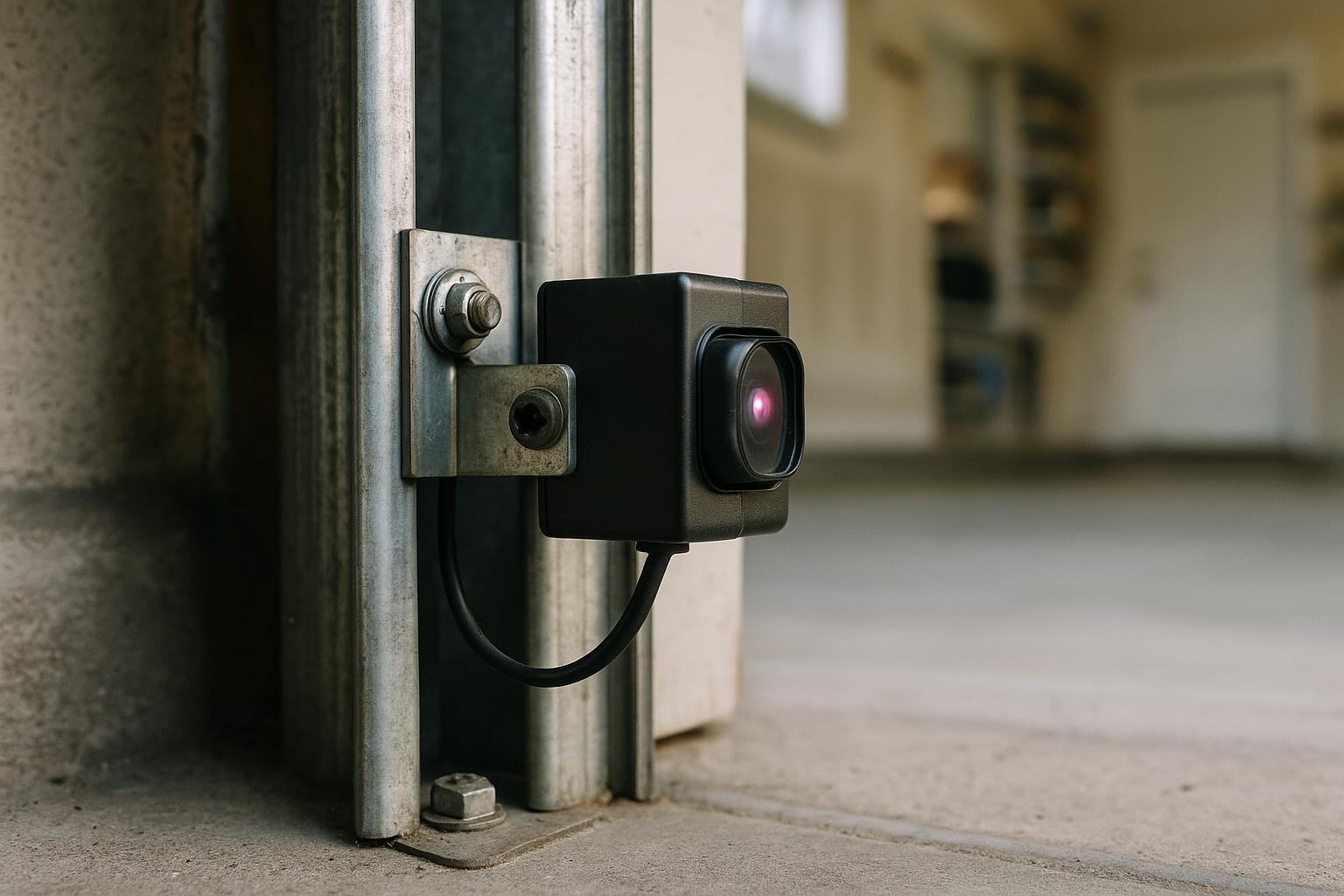
This is the number one cause of a garage door reversing prematurely. Every modern garage door opener manufactured after 1993 is required to have photo-eye safety sensors mounted near the bottom of the door tracks, about six inches off the ground. These sensors send an invisible beam across the doorway, and if anything breaks that beam — a bike, a trash can, a leaf, or even a cobweb — the door will automatically reverse.
What to Check
- Obstructions: Look for anything in the path of the sensors, even something small. Move toys, tools, and debris away from the door opening.
- Dirty lenses: Wipe the sensor lenses with a soft cloth. Dust, dirt, and spider webs are incredibly common in Georgia garages, especially during the warmer months.
- Alignment: Each sensor has a small LED light. If one is blinking rather than staying solid, the sensors are likely misaligned. Gently adjust the sensor bracket until both lights are solid and steady.
If cleaning and realigning the sensors doesn't solve the problem, the sensors themselves may be faulty and need replacement. This is a quick fix that our team handles regularly for homeowners in Grovetown and surrounding communities like Evans and Martinez.
2. Incorrect Close-Limit Settings
Your garage door opener has close-limit settings that tell the motor exactly how far the door should travel before it's considered fully closed. If these settings are off — even by a small margin — the opener may interpret the door hitting the ground as an obstruction and trigger an automatic reversal.
How This Happens
Close-limit settings can drift over time due to temperature changes, normal wear, or after a power outage resets the opener. In areas like Grovetown where we experience significant temperature swings between summer and winter, metal components expand and contract, which can gradually throw off these calibrations.
Most openers have adjustment screws or digital settings that control the travel distance. Your owner's manual will show you where these controls are located. Small adjustments — usually a quarter turn at a time — can make a big difference. However, if you're unsure about making these adjustments yourself, it's best to have a professional handle it to avoid creating new problems.
3. Worn or Damaged Tracks
The metal tracks that guide your garage door up and down need to be straight, clean, and properly aligned. Over time, tracks can develop bends, accumulate grime, or shift out of alignment. When this happens, the door may bind or encounter resistance during its travel, causing the opener's safety mechanism to kick in and reverse the door.
Signs of Track Problems
- Visible dents or bends in the track
- Scraping or grinding noises during operation
- The door appears crooked or uneven as it moves
- Gaps between the rollers and the track
Minor debris can be cleaned out with a rag, but bent or misaligned tracks typically require professional track repair and realignment. Attempting to bend tracks back into shape without the proper tools can make the problem worse or create a safety hazard.
4. Broken or Worn Cables
Your garage door cables work in tandem with the springs to control the door's movement. If a cable is fraying, loose, or has jumped off its drum, it can cause uneven tension that makes the door bind. The opener senses this resistance and reverses as a safety precaution.
Cable issues are something you should never attempt to fix yourself. These components are under significant tension and can cause serious injury if handled improperly. If you suspect a cable problem, call a professional right away.
5. Problems with the Opener Itself
Sometimes the issue isn't mechanical at all — it's the opener's logic board or internal components. Electrical surges, age, and general wear can cause the circuit board to malfunction, sending incorrect signals that trigger a reversal. If your opener is more than 10 to 15 years old and you've ruled out the other causes on this list, it may be time to consider a new opener installation.
Modern garage door openers offer significant advantages over older models, including quieter operation, smartphone connectivity, battery backup during power outages, and improved security features. Upgrading your opener is often more cost-effective than repeatedly repairing an aging unit.
6. Spring Issues Causing Imbalanced Weight
A garage door that's not properly balanced — often due to a weakening or broken spring — requires the opener to work much harder than it should. The opener may interpret this extra resistance as an obstruction and reverse the door. You can test your door's balance by disconnecting the opener and manually lifting the door halfway. If it doesn't stay in place on its own, the springs likely need attention.
Spring repair is another job that should always be left to trained professionals. The torsion and extension springs on a garage door store an enormous amount of energy, and improper handling can lead to severe injuries.
When to Call a Professional
Some of the fixes above — cleaning sensors, removing obstructions, making minor limit adjustments — are reasonable DIY tasks for handy homeowners. But if you've tried the basics and your garage door is still reversing, or if the problem involves springs, cables, or tracks, it's time to bring in a professional.
At Grovetown Garage Door Repair, we diagnose and fix reversal issues every week for homeowners throughout Grovetown, Harlem, Appling, and the greater Augusta area. We offer same-day service for urgent situations because we understand that a garage door that won't close isn't something you can ignore.
Don't Ignore a Reversing Garage Door
It might be tempting to just keep pressing the button until the door finally stays down, or to hold the wall button to force it closed. But these workarounds bypass the safety features that are designed to protect your family and your property. The underlying problem won't go away on its own, and in many cases, it will get worse over time.
If your garage door keeps reversing and you can't pinpoint the cause, give us a call. We'll get to the bottom of it and have your door working reliably again — usually in a single visit.